
Five Years Later
A Triumvirate For Turbulence In Life After The Liminal

I was lying in bed, and my head was pounding so fiercely in a way I had never experienced. My temperature was rising steadily, somewhere between 102 and 104. I was in and out of sleep, and the reality between the two kept blurring into each other. I couldn’t work; I could barely function, and I kept the television on in the background so I would not have to lie in silence, with cable news being my noise of choice. That’s when it happened: the breaking news swoosh I had become used to ignoring was followed by scenes and a moment in my life that I will never forget. I could swear I saw a horde of people swarming our nation’s Capitol building.
I shook my head and rubbed my eyes.
I had never experienced delirium, so I was not sure if this was some phase of COVID-19 that was taking effect. I had never been this sick in my life, and so my mind rationalized that I could be hallucinating. I wiped the balmy sweat away, took a deep breath, grabbed my arm firmly to see if I could feel it, and leaned in. I didn’t imagine it; it was January 6, 2021, and I was on day six of fighting the virus while watching people hanging from windows, fences, and other parts of our Capitol building. Finally convinced that what I was seeing was real, I started texting friends and family, of course, and then I went back to my new routine of feeling like I might be dying.
I wish I could say I exaggerate here, but I’m not.
In addition to splitting headaches, extreme fever, losing my sense of smell (before smelling “ashtrays” for days), multiple nights of waking up completely soaked in sweat so bad that my clothes (and bedsheets) had to be changed numerous times, my body wasn’t getting enough oxygen. I knew this because, before things started to get bad, I had enough presence of mind to purchase a pulse oximeter (a device that measures blood oxygen saturation). The devices help tell you how much oxygen your lungs are pumping into your bloodstream. The range you want to be in is around 95-100; mine was hovering around 78-80.
I will never forget the trip to the hospital. My then-fiancée was on crutches due to a recent knee surgery, and I could barely move. I had zero stamina. I mean ZERO. The walk from the car into the emergency room felt like a six-mile hike. I had to stop and lean against a wall more than once. I was lugging a heavy backpack filled with my laptop, iPad, and a change of clothes. I had no idea how long I would be in the hospital or if I’d be able to walk out.
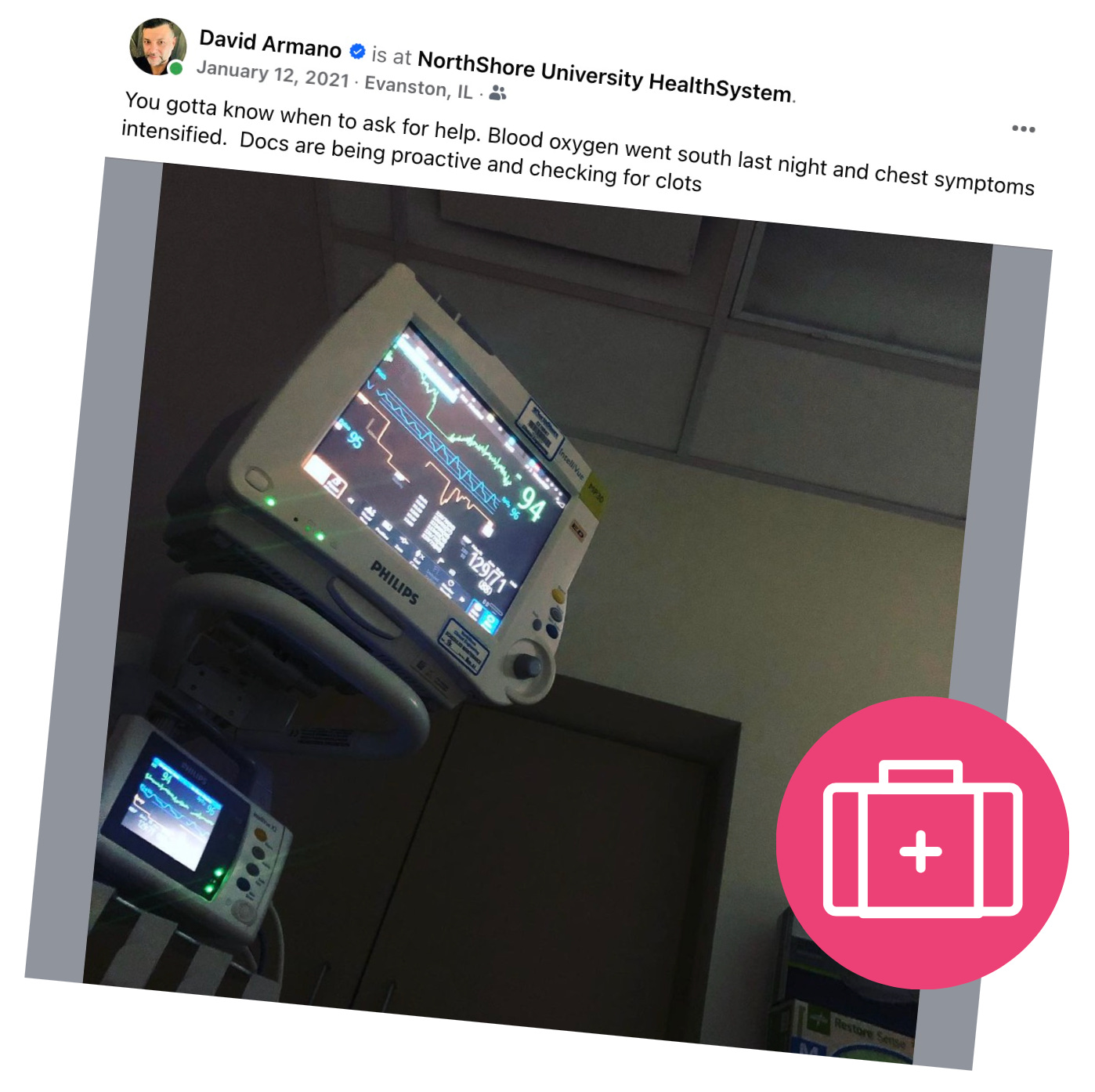
Fortunately, the doctor came back with good news (mostly). The bad news was that I did have COVID-induced pneumonia—you know, the thing that kept people from leaving the ICU. The good news was that despite this, the doctor thought my lungs looked “good” or good enough to give me the choice to leave the hospital if that’s what I wanted. HECK YES, that is what I wanted. I figured my odds would be better if the doctor felt like I could power through pneumonia on my own. And with that, I was off with steroids and other prescriptions to help my body do its job. In January 2021, there were no vaccines, and there was a good chance that I had caught the Delta variant of COVID-19, which was formidable. People were still dying during this phase of the pandemic. Little did I know that I was about to face one of the worst phases of the sickness.
I’ve never had pneumonia, let alone pneumonia caused by a novel virus. It KICKED my butt. It’s that simple.
The debilitating headaches, extreme temperature, gastrointestinal issues, and other early symptoms were replaced with violent, body-shaking coughing fits, pronounced fatigue, and this thing called “brain fog,” which I realized was a genuine symptom. It was so real that I knew I had it for approximately 3-4 weeks, and when the fog “lifted,” I immediately could tell the difference. I was able to think clearly, and while my body was still getting rocked by deep guttural coughs, I was able to mentally function at least the way I used to before the virus ravaged my body.
As I write these words, I am reminded of the cliché, “that which does not kill you makes you stronger”—I’m unsure if I feel stronger per se, but I feel like I’ve been “through it.” A little context is needed as a backdrop to this slight brush with mortality: only a few months before contracting COVID, I was included in a pandemic-related mass layoff after nearly eleven years of gainful employment with the same company. Shortly after that event, months of violent and disruptive civil unrest spread throughout the nation, forcing difficult conversations about race and inequity but equally sparking chaotic scenes which, when paired with the pandemic (and a lack of stable employment), felt somewhat apocalyptic.
I could not have felt more vulnerable when I got infected…
At the time, I was a couple of months into an interim CMO role that was going OK, but I took only the bare minimum of sick time, since it was a contract role. I returned a thinner, paler, coughing… no, hacking version of myself. I did my best, which took all my strength and focus, but I knew the virus had compromised me and that my performance was impacted. The first tickle of a cough started on January 1, 2021, New Year’s Day—a day that is supposed to usher in new hopes and dreams. I would not feel like myself again until April. Looking back, I know I am one of the fortunate ones.
I reflect on this not only because of the five-year mark, but as I look out to the future—one I often refer to as “TBD”, it reminds me of how I had to rebuild myself. In December of 2022, I became an early adopter of ChatGPT, and even in its infant, hallucination-prone state, I could see the likely long term impact of Generative AI on modern work and society:
Nothing short of a white-collar Industrial Revolution, I thought to myself…
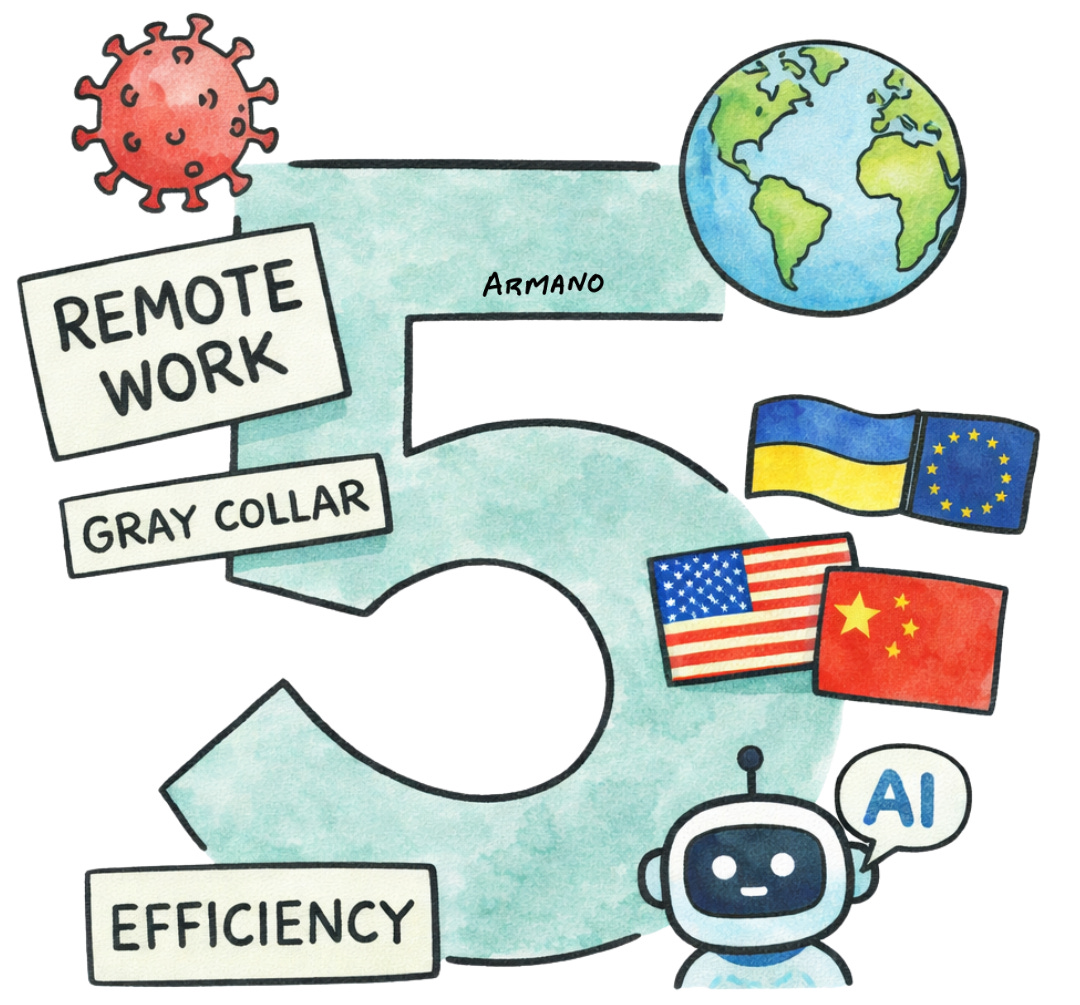
But this commodification of intelligence isn’t the only thing we’re all adapting to. I believe that years later, we are still dealing with extended fallout from the pandemic. Minnesota politicians for example, are openly admitting that lackadaisical guardrails placed on Covid-era programs helped enable mass fraud across the state. Gen Z bears the scars from lockdowns during their formative years, grappling with their transition into the workforce as well as adult life. My local Walgreens still locks away much of their product behind plexiglass. And while Europe’s leaders focus on what Putin does next, the U.S. shifts its attention to China. A recent article makes the case that more people, especially Gen Z are reframing their career expectations as anything but stable, traditional, or ideal:
The thing is, everyone feels that their own generation has been hard done by – but now, the global economy, the jobs market, the ripple effects of the Covid pandemic, the Ukraine-Russian war, the cost of living crisis and successive governments scrabbling over growing national debt means that, basically, in some way, everyone is right. “Many people have a sense of unfairness within their generation,”… “And so, looking at ways of bringing in passive income, starting a side hustle, or learning how to invest or trade makes them feel they can get ahead of a less-than-ideal situation.”
It’s a significantly different post-pandemic world even if it looks roughly the same as before. And it’s shape shifting in real time.
“Resilience” became an overused word five years ago, yet, with some irony, the notion of resilience is possibly more relevant today than during the pandemic. Over the next year, I think one of the most high-signal indicators will come from the world’s influential CEOs. Watching where they are investing, what they are focused on, and reading between the lines of their public statements is going to be more informative than any speculation coming from prognosticators.
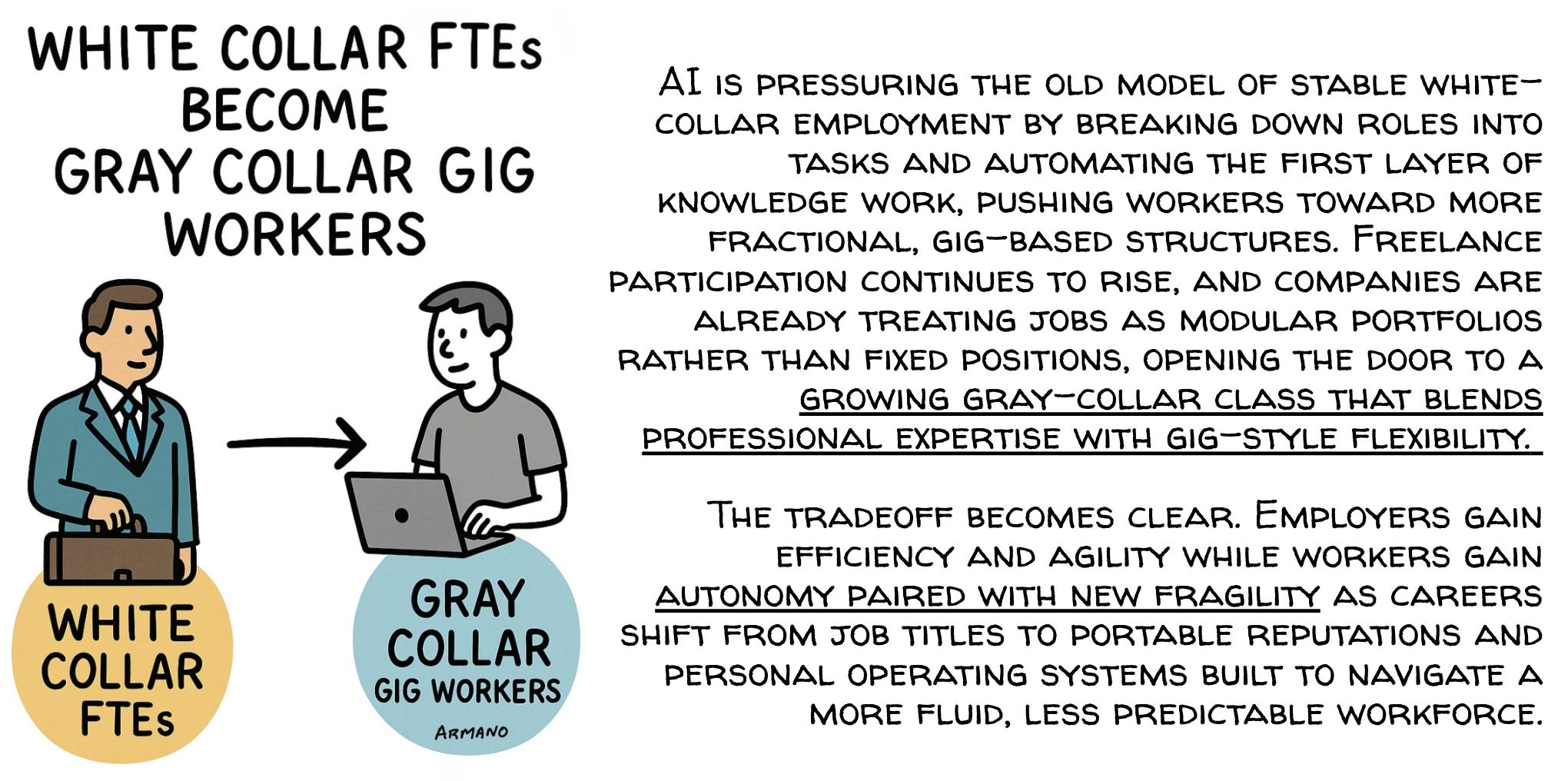
In 2025, and arguably the years leading up to it, we’ve witnessed what I believe is a social contagion amongst CEOs to pursue ruthless efficiency as a way to bolster profit and shareholder value. Much of the spark for this movement started in the tech sector, which notoriously over-hired during the pandemic. This was before the advent of Generative AI. But AI has given CEOs air cover to conduct further streamlining. All the while business leaders have an ally in a U.S. government, signaling that our national ambitions will only be realized with more highly skilled blue collar workers—something the country has been in deficit of for decades.
For the white-collar knowledge worker however, the future looks gray:
Which brings me back to my opening story of COVID, career transition, and life in the liminal. Five years later, I look back at one of the more challenging times in my life with a different perspective. In retrospect, it feels like a training ground. For nearly two years, I operated as an independent gray-collar gig worker, navigating the ups and downs of 1099 contract work. During the “great resignation,” when companies over-hired and employees left for better opportunities—there were times I recall wondering to myself:
“Where did I go wrong in my own career navigation?”
Nowadays, I no longer see it this way. I now view my pandemic experience as the ultimate preparation for a future that’s TBD, where work and life will look slightly less traditional and familiar with every passing month.
A Triumvirate For Turbulence
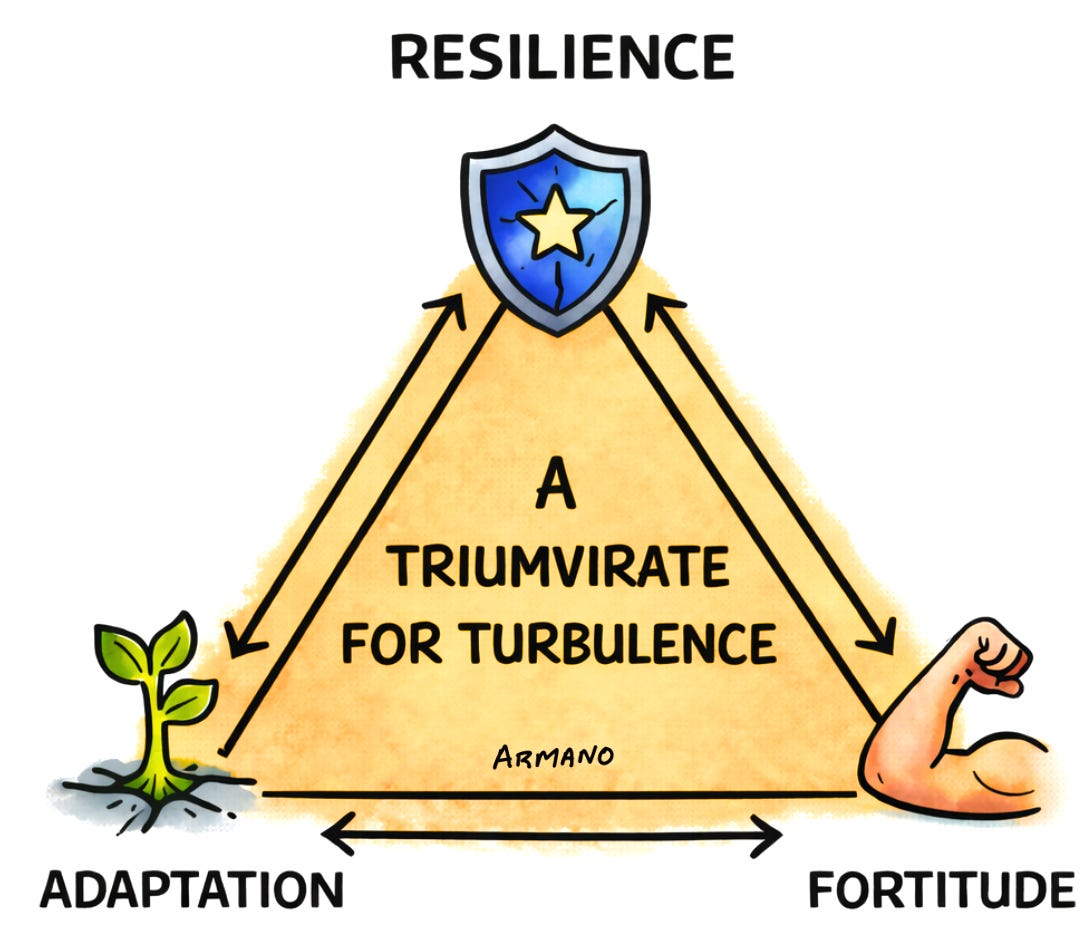
Resilience. Adaptation. Fortitude.
This triumvirate for turbulent times combines character and attitude, with a blend of IQ/EQ—determining tomorrow’s winners and losers. Those who have enjoyed great success in the past may not be guaranteed this in the future. Those who have struggled in the past may find new tools to help them advance forward.
We’re all going to have to adapt.
I try to remind myself from time to time of the challenges I faced during the pandemic. I recovered from COVID-induced pneumonia and did surprisingly well as an independent consultant before re-joining the workforce as an FTE. The world knocked me down, the virus knocked the wind out of me, and I kept getting back up.
If you can relate to any of the above, you might be in a better place than you know. If there’s anything we can count on for 2026, it’s that we can feel certain about the uncertainty to come.
Visually yours,
David Armano is a futurist, strategist, and Enterprise AI transformation leader who helps his colleagues, clients, and community solve intricate business challenges and see a clear path forward.
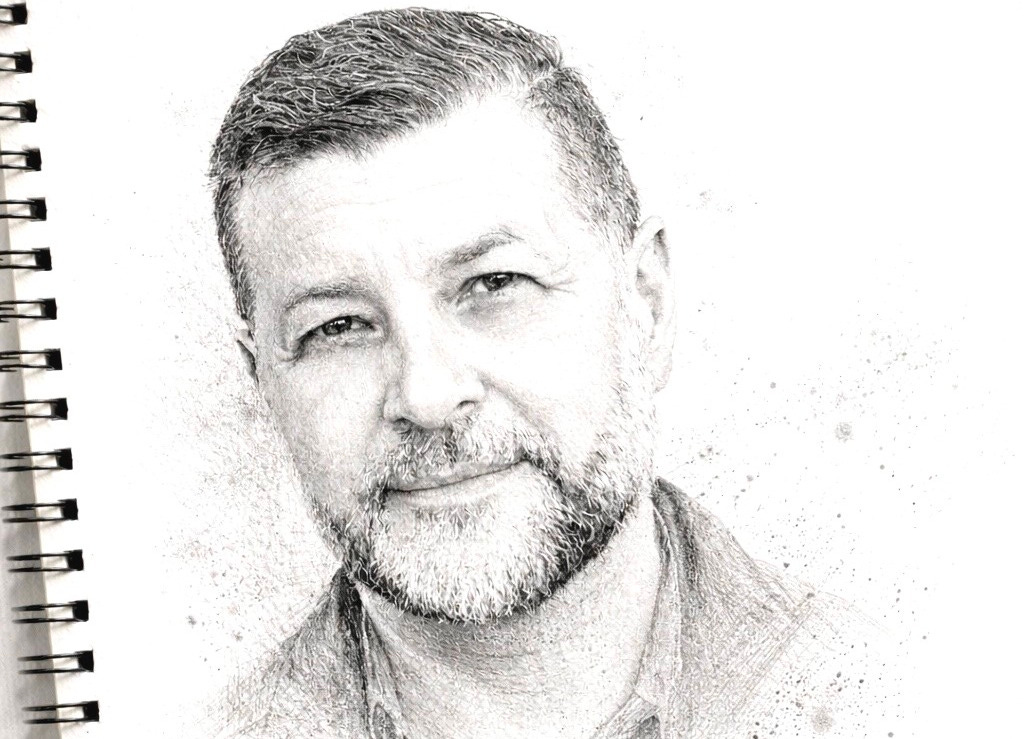
He’s known for his unique approach to visual thinking and insightful, yet grounded, takes on intelligent experiences, culture, and leadership. In addition to his day job, he writes David by Design to translate complex shifts into actionable ideas.
Quite moving, David. Interesting to read your recounting your experience of the past half-decade. Thanks for sharing.
One thing I’ll add: this country dodged a major bullet in November 2024. I can’t imagine what a Kamala presidency would be like now.
Looking forward to reading your observations in 2026!